
Bird Owners

Birds do not get quieter with age. They get quieter when something is wrong.

Companion birds are long-lived, highly social and exceptionally good at hiding illness. That combination means the things owners are told to watch for behaviourally and the things that signal disease are very nearly the same list, and the order you investigate them in matters.

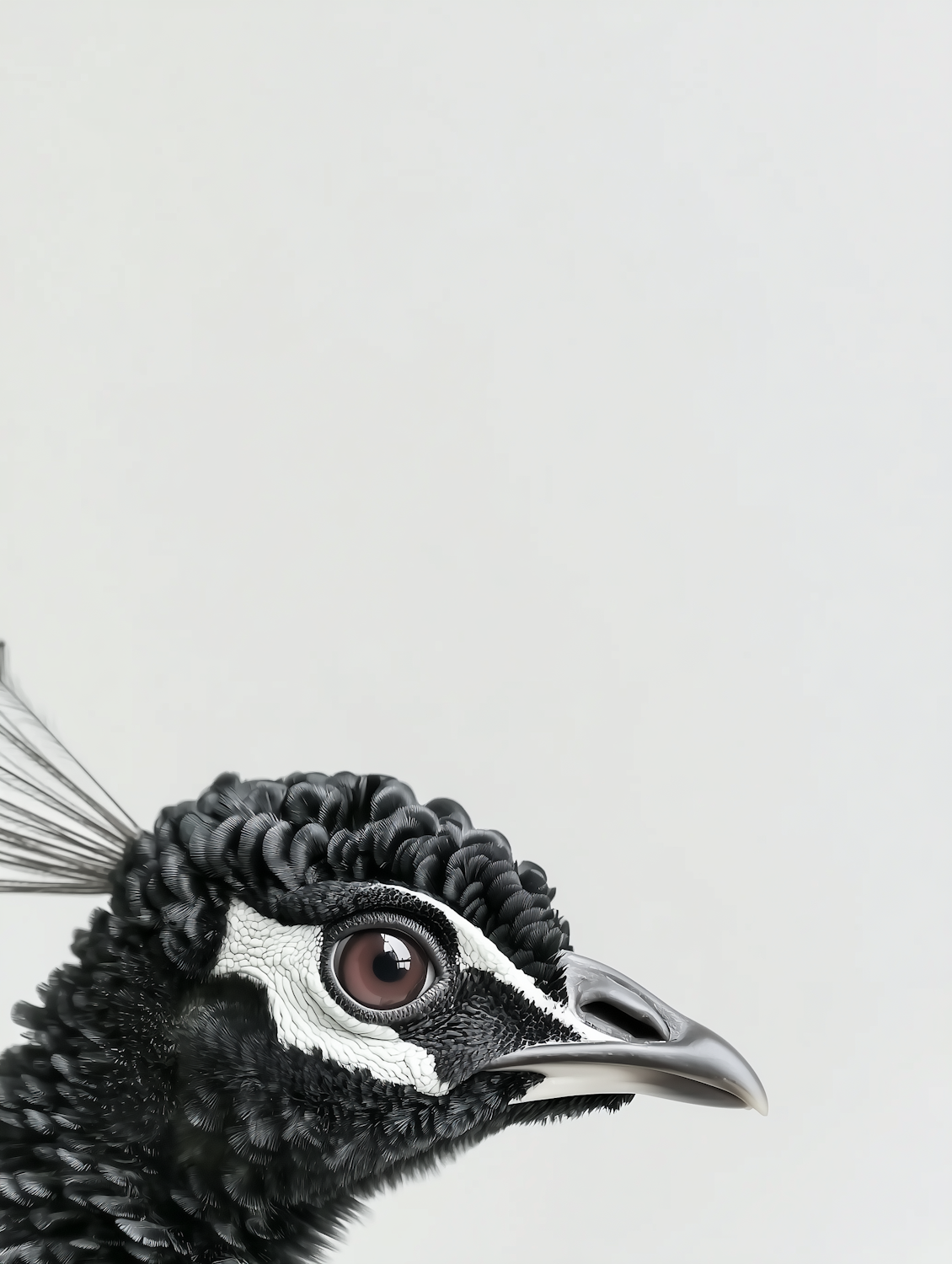
Close-up portrait of a bird with finely patterned black and white feathers
01 / Relational needs

What a bird actually needs from you.

A parrot in a home has replaced a flock with a household. Almost every behaviour problem we are asked about traces back to that substitution being incomplete in one direction or too complete in another.

A companion bird is a flock member, not an ornament

Parrots and most companion birds are social animals that in the wild spend their entire day within sight and sound of others, foraging, preening and moving as a group. In a home, your household becomes that flock, and isolation is experienced as genuine deprivation rather than mild boredom.

  • Place the cage where the family actually spends time, not in a spare room
  • Talk to the bird as you pass, since contact calls answered are how flocks stay reassured
  • Give a quieter corner or a partial cover so there is somewhere to retreat to as well

Out-of-cage time is not optional

No cage sold is large enough for a parrot to meet its movement needs inside it. Daily supervised time outside the cage is where flight muscle, coordination and most of the relationship are built.

  • Aim for at least two to four hours daily for parrots, supervised throughout
  • Bird-proof first: closed windows, covered mirrors, no open water, no other pets loose
  • A play stand or window perch gives somewhere to be that is not the cage or your shoulder

Read the body language before you touch

Most bites are the end of a conversation the person did not notice starting. Birds signal discomfort clearly and consistently, and a bird whose signals are respected becomes markedly easier to handle.

  • Pinned or flashing pupils, a fanned tail and raised nape feathers signal high arousal
  • Beak clicking, leaning away, or stepping back are all requests for space
  • Relaxed birds preen, stretch one wing and leg together, grind their beak and fluff before sleep
  • Offer your hand and wait to be stepped onto rather than lifting the bird off a perch

Choice-based interaction builds trust fastest

Positive reinforcement training is the most effective relationship tool available to a bird owner, and it works because it gives the bird control over what happens next. Five minutes a day changes a fearful bird within weeks.

  • Target training first: touching a stick on cue, rewarded with a favourite seed
  • Then station training, step-up, and recall inside the room
  • Never grab, chase or towel a bird for routine handling, since it costs weeks of trust
  • End every session while the bird is still keen rather than when it disengages

One person, or the whole household

Many parrots pair-bond intensely and will choose one person, then defend that person aggressively against everyone else. It is normal behaviour, but a bird that only tolerates one human is fragile if circumstances change.

  • Have every household member feed, train and offer treats from early on
  • Discourage tucking a bird under clothing or against the neck, which reinforces mate behaviour
  • Persistent regurgitation, tail-lifting and territorial cage defence are hormonal signals worth discussing
  • Twelve hours of dark uninterrupted sleep helps keep hormonal behaviour in check

Companions of their own species

Whether a second bird helps depends heavily on species. Budgerigars and cockatiels are flock birds that usually do better in pairs, while some larger parrots do not accept a new bird easily and pairing can create as many problems as it solves.

  • A second bird is not a substitute for your time and attention
  • Quarantine any new bird and have it checked by an avian vet before introductions
  • Introduce through separate cages in the same room over weeks, never straight into one cage
02 / Signs of depression

Reading low mood in an animal built to hide it.

Start with the warning, then work through the behavioural signs. The order is not optional: every sign below has a medical explanation that has to be excluded before it is treated as psychological.

Read this first

Assume illness first, always

  • Signs of low mood and signs of illness are nearly identical in birds

    As prey animals, birds mask weakness until they can no longer compensate, so a bird that looks unwell has usually been unwell for a while. Every behaviour on this page can equally be caused by pain, infection, liver or heart disease, heavy metal toxicity or a nutritional deficiency.

  • Sitting fluffed at the bottom of the cage

    A bird on the cage floor, fluffed, with eyes closing, is an emergency. Treat it as an avian veterinary visit today rather than a mood to be lifted with a new toy.

  • Tail bobbing, open-beak breathing, or a change in voice

    Respiratory effort in a bird escalates quickly. A change in the sound of the voice can mean the airway itself is affected.

  • Any drop in weight of around ten per cent

    This is why weekly weighing on a gram scale matters. Weight falls measurably before a bird looks any different, and it is the earliest warning most owners can act on.

Investigate

Behavioural signs of depression and distress

  • Feather destructive behaviour

    Plucking, chewing feather shafts, barbering the edges or self-mutilating skin. Medical causes are found in a large share of cases and must be excluded before it is treated as psychological.

  • Going quiet, or screaming in a new way

    A bird that stops vocalising has usually withdrawn. Persistent contact screaming often means it is calling for a flock that never answers.

  • Loss of interest in food, toys and people

    Refusing a favourite food, ignoring a toy that was played with daily, or no longer coming to the cage door are all meaningful changes in an animal of routine.

  • Sleeping through the day

    Daytime lethargy in a bird with adequate night-time darkness is not restfulness. It is one of the most reliable signals that something is wrong.

  • Repetitive, purposeless movement

    Pacing a set route along the perch, spinning, head swinging, or over-preening one spot. Stereotypies develop where an animal has too little to do and no control over its environment.

  • New aggression or fearfulness

    Biting, lunging or refusing to step up from a bird that previously did so willingly is a change worth taking seriously rather than training over.

  • Withdrawal after a change

    A house move, a new work pattern, a room rearrangement or the loss of a companion bird or person can all trigger a genuine decline in a bonded bird.
03 / Care tips

Changes that lift a bird, in order of effect.

These are the interventions that produce visible change in weeks rather than months. Foraging and sleep are at the top because they are the two most commonly missing and the two most commonly transformative.

  1. Make the bird work for at least half its food

    Why it helps

    Wild parrots spend a large part of the day foraging, and captive birds given food in a bowl have that entire occupation removed. Wrapping food in paper, threading vegetables onto a skewer, hiding portions in foraging toys and scattering pellets in shredded paper gives that time back and is the single most effective intervention against plucking and screaming.

    Watch for: Introduce foraging gradually and make sure the bird is still finding and eating enough, especially in the first week.

  2. Base the diet on formulated pellets, not seed

    Why it helps

    A quality formulated pellet at roughly half to three quarters of the diet, topped up with fresh vegetables, leafy greens and a small amount of fruit, prevents the deficiencies that all-seed diets reliably cause. Seed-only feeding leads to vitamin A deficiency, obesity and fatty liver disease.

    Watch for: Converting a seed-addicted bird takes weeks and must be monitored, since birds can starve rather than accept unfamiliar food. Never withdraw seed abruptly without guidance and weight checks.

  3. Keep the air clean

    Why it helps

    Birds have an exceptionally efficient respiratory system, which also makes them exquisitely vulnerable to airborne toxins. Removing these hazards costs nothing and prevents sudden deaths that are otherwise unexplained.

    Watch for: Overheated non-stick cookware releases fumes that kill birds within minutes. Also avoid aerosols, scented candles, plug-in air fresheners, self-cleaning oven cycles, smoke and vaping.

  4. Twelve hours of dark, uninterrupted sleep

    Why it helps

    Birds need a long, genuinely dark and quiet night. Sleep deprivation shows up as irritability, biting and hormonal behaviour, and correcting it often resolves problems that owners have been trying to train away for months.

    Watch for: A cage in a room where the television runs late is not a dark room. A separate sleeping cage in a quiet room is often the simplest fix.

  5. Choose the cage by width, and vary the perches

    Why it helps

    Horizontal space matters more than height, because birds fly across rather than up. Perches of varying natural diameter exercise the feet and prevent pressure sores, and placing the cage against one wall at roughly chest height gives security without isolation.

    Watch for: Remove sandpaper perch covers, which abrade the feet, and avoid uniform dowel perches as the only option. Check that bar spacing is right for the species so heads cannot become trapped.

  6. Bathe or mist two or three times a week

    Why it helps

    Regular bathing supports feather condition, reduces dust and is genuinely enjoyed by most birds once they are used to it. A shallow dish, a gentle mist or a shower perch all work, depending on the bird.

    Watch for: Use plain lukewarm water only, never soap, and let the bird dry in a warm, draught-free room rather than with a hairdryer.

  7. Rotate enrichment weekly

    Why it helps

    Novelty is the point. Shreddable toys, foot toys, puzzles, natural branches and destructible cardboard all give a bird something to do, and rotating them keeps the same collection interesting for months.

    Watch for: Check toys weekly for frayed rope, worn clips and cracked plastic. Avoid zinc and lead components, since heavy metal poisoning is a common and preventable cause of illness.

  8. Weigh weekly and keep a record

    Why it helps

    A gram scale with a perch is the most useful piece of equipment a bird owner can buy. A simple weekly log turns a vague sense that something is off into a specific number you can hand to an avian vet.

    Watch for: Weigh at the same time of day, ideally in the morning before feeding, so the numbers are comparable.

  9. Find an avian vet before you need one

    Why it helps

    Not every small animal practice sees birds regularly. Identifying an avian-experienced vet while your bird is well, and booking a baseline check, means you are not searching for one during an emergency.

    Watch for: Ask about out-of-hours arrangements at the same time, since many emergency clinics do not treat birds.

04 / When to consult

What we can help with, and what needs hands on the bird.

Being honest about the boundary is part of the service. Environment, diet and behaviour we can work through together; anything acute belongs with an avian veterinarian the same day.

What a consult can do for a bird

Most of what makes companion birds unwell in the long run is environmental and dietary, and both are fixable from the outside. A consult is where we go through the cage, the diet, the daily routine and the footage of the behaviour you are worried about.

  • Rebuild the daily routine around foraging, sleep and out-of-cage time
  • Plan a safe, monitored conversion from seed to a formulated base diet
  • Work through a plucking or screaming problem after medical causes have been excluded
  • Prepare the questions and history to take to an avian veterinarian

What has to happen in person

Birds hide illness until late, which makes hands-on examination and diagnostics far more important than in dogs and cats. Anything on the emergency list belongs with an avian vet the same day, not in a video call.

  • Any bird on the floor of the cage, fluffed, or breathing with effort
  • Bleeding, a broken blood feather that will not stop, or any injury
  • Sudden weight loss, vomiting, or a change in droppings lasting more than a day
  • Anything that began after possible contact with fumes, metal or a toxic plant

Worried your bird has gone quiet?

Have a recent weight and a short video of the behaviour ready. A Pexpert will work through the environment, the diet and the routine with you, and tell you plainly if it needs an avian vet instead.

Schedule a Consultation

Paradigm Pet Professionals provides educational guidance and second-opinion review. It does not replace hands-on examination, diagnosis or emergency treatment by a licensed veterinarian in your area.

Expires in

Limited time offer

We rebuilt your site for you. Claim it and we handle everything transfer, hosting, and your domain. Then update it anytime, just by asking AI.

Host for only$8 per monthBilled yearly
Claim limited offer now